glow academy
The complete self-tanning guide
6 July 2026 · MARC INBANE · 6 min read
“ Cheaper products often use a unstable DHA, which can lead to the well-known orange glow ”

A natural, bronzed complexion without UV radiation is not a matter of luck, but of the right knowledge: understanding how self-tanner works, which formula suits your skin and the area you want to tan, and how to build a flawless, long-lasting result. This guide gives you the complete foundation, from how DHA works to an overview of all product types. For each topic, we also link to more in-depth guides that help you achieve the perfect tan.
What is self-tanner?
Self-tanner is a cosmetic product that temporarily tans the skin without UV radiation. Most self-tanners, including those from MARC INBANE, do this with the active ingredient DHA. “Sunless tan”, “self tan” and “fake tan” are all terms for the same thing.
A self-tanner only colours the outer, dead layer of the skin and does not penetrate the living skin or the bloodstream. You will find the same promise under many names, such as self-tanner, sunless tan, self tan, fake tan and self-tanning skincare, but they all mean the same thing. The difference is not in the type, but in the quality of the formula: a high-quality self-tanner builds a natural-looking tan without an orange undertone and without the typical self-tan smell.
The ingredient that creates the colour in almost all self-tanners is DHA, often combined with erythrulose for a more gradual result. Carotene-based tanning is different: it mainly works through food or supplements, the well-known carrot route, and gives a less controllable, often more orange-toned colour. Self-tanners that you apply to the skin work with DHA.
How does self-tanner work on your skin?
The active ingredient DHA reacts with the amino acids in the upper layer of the skin. The colour becomes visible within 2 to 3 hours, fully develops after 6 to 8 hours and remains visible for an average of 3 to 7 days.
DHA, or dihydroxyacetone, is a sugar that creates a mild reaction with the amino acids in the stratum corneum, the upper layer of dead skin cells. Because this layer contains no living cells, the process is safe and painless: no melanin or UV radiation is involved, so there is no risk of sunburn or skin ageing. The tan is semi-permanent; as your skin renews itself, the coloured cells shed invisibly and the colour gradually fades.
The life cycle of your tan:
PHASEWHENWHAT HAPPENSApplication/DHA comes in contact with the skin and the reaction startsDevelopment2-3 hoursThe first colour becomes visibleFully developed6-8 hoursMaximum, even intensity is reachedFading3-7 daysColoured cells shed and the colour gradually fades
How long your tan stays beautiful depends on your skin type and your skincare routine. Dry skin sheds dead cells faster and more unevenly, which can lead to a patchy fade. That is why proper preparation and hydration are essential, more on that later in this guide.
What makes a self-tanner good?
A good self-tanner gives a streak-free result without an orange undertone, dries quickly and contains hydrating ingredients that care for the skin instead of drying it out.
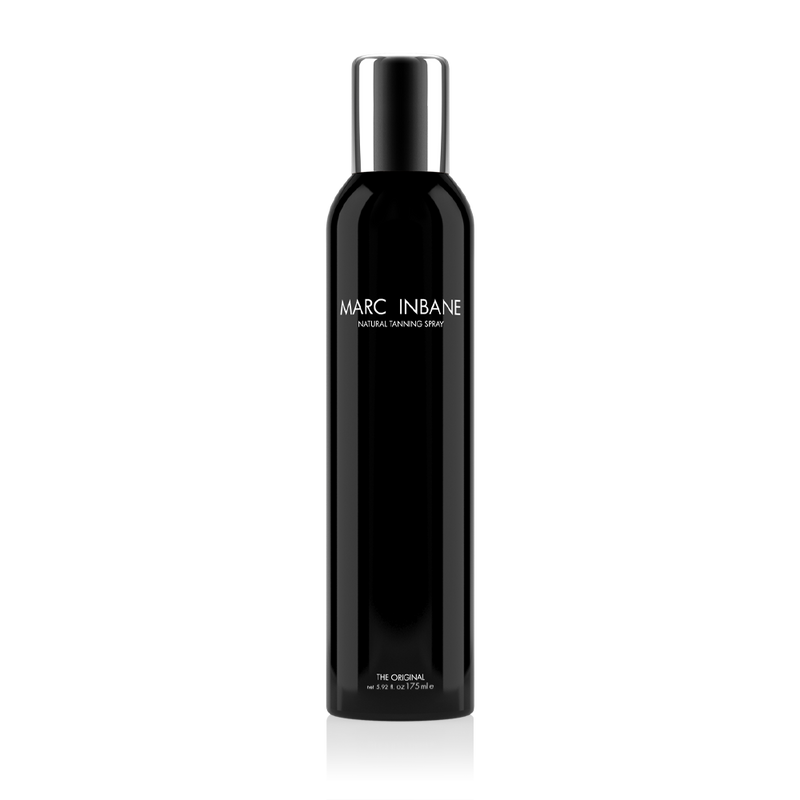
Cheaper products often use a coarse, unstable DHA, which can lead to the well-known orange glow and a strong smell. A high-quality formula builds colour more finely and evenly and is enriched with caring ingredients. The Natural Tanning Spray from MARC INBANE, for example, contains Aloe Vera, Ginkgo and Vitamin E, while the Mousse and Hyaluronic Self-Tan Spray contain hyaluronic acid to hydrate the skin and improve its texture. A good self-tanner therefore does more than give colour; it works as a caring treatment.
What types of self-tanner are there?
Self-tanner comes in different forms, such as spray, mousse, drops and lotion. The best choice depends on the area, your experience level and how long you want the result to last.
Not sure which sunless tanning product suits you best? The Tanning Finder helps you find the right match in just a few questions, or explore the full self-tanner collection.
How to apply self-tanner: the basics
A flawless result depends on four key principles: exfoliate beforehand, hydrate dry areas, apply with a Tanning Glove, and build colour in thin layers instead of one thick layer.
Preparation determines 80% of your result. Exfoliate 24 hours in advance with an oil-free scrub for an even base, hydrate dry areas such as knees, elbows and ankles just before tanning to prevent them from absorbing too much colour, and always apply the product with a Tanning Glove. Bare hands or a regular washcloth waste product and cause streaks. Build the colour with two thin layers for a deeper, more even result. You can find the complete step-by-step routine, including all techniques and exceptions, in our guide on how to apply self-tanner without streaks.
Self-tanner by area: face, legs and body
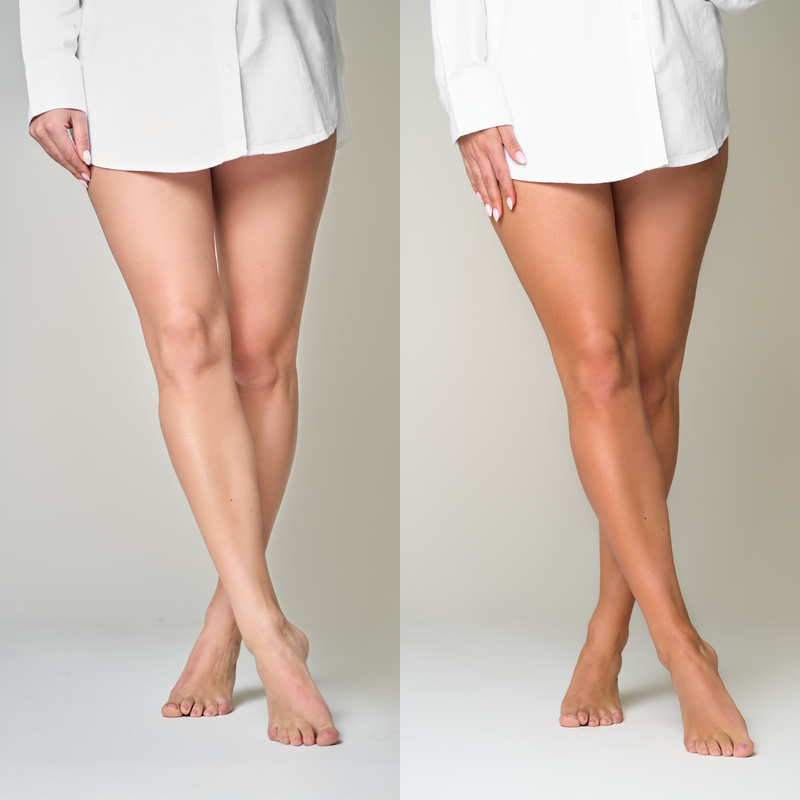
Each area needs its own approach. Facial skin is finer and often oilier, so it requires gentle, non-comedogenic formulas; tanning drops mixed into your day cream give the most control here. (guide for face)The legs have a thicker, drier stratum corneum around the knees and ankles, which absorbs colour more intensely; a mousse or spray applied with the Glove helps prevent stains and streaks.(guide for legs) For the full body, speed and smooth movements matter most; a mousse glides most easily over larger areas and blends evenly.
How long does self-tanner last and how do you maintain it?
Self-tanner stays visibly beautiful for an average of 3 to 7 days. You can extend the result by hydrating your skin daily and avoiding hot, long showers, rough towel-drying and oil-based products.
The tan fades as your skin cells shed, so the longer you keep those cells hydrated and stable, the longer your glow lasts. A daily body lotion noticeably slows down this process. If you want to maintain a deeper tan, refresh it every 3 to 4 days with a thin layer. The full maintenance routine and complete list of what to avoid can be found in our guide on how long self-tanner lasts.
How do you remove self-tanner?
The best way to remove self-tanner is to soften the skin under a warm shower and then gently exfoliate in circular motions. Never scrub aggressively or use harsh chemical products.
Because the colour only sits in the upper layer of the skin, it releases in a controlled way with a mild scrub or an Exfoliating Mitt. A warm bath softens the dead skin cells, a gentle scrub then removes the coloured cells without irritating the healthy skin underneath, and a moisturiser immediately restores the skin’s moisture balance. For correcting individual stains and streaks, see our guide on removing self-tanner and correcting stains.
Is self-tanner safe?
Yes. Self-tanner only works on the dead upper layer of the skin, without UV radiation and without penetrating the bloodstream. DHA is approved as a safe ingredient for cosmetic use.
Unlike sunbathing or using a sunbed, where UV radiation causes cell damage, tanning with a self-tanner is a safe alternative. Important to know: self-tanner does not contain SPF and therefore does not protect against the sun. For specific situations such as pregnancy and combining self-tanner with sun protection, see the guides on safe tanning.
In-depth guides in the Glow Academy
- How to apply self-tanner without streaks: for a flawless step-by-step routine
- How to remove self-tanner and correct stains: first aid for streaks and patches
- How long does self-tanner last?: and how to make it last longer
Is self-tanner safe?: everything about DHA, pregnancy and the sun - The right information for each area: face and legs


Perle de Soleil
Award-winning tanning drops to mix with your day cream
€ 44,95

Natural Tanning Spray
Our bestseller! Enriched with pure and nourishing ingredients
€ 9,95

Glove
For an even application of tanning on the body
In this article