glow academy
Is self-tanning safe during pregnancy?
6 July 2026 · MARC INBANE · 2 min read
Is self-tanning safe during pregnancy?

During pregnancy, you do not want to take any risks with what you apply or spray onto your skin. A common question is therefore whether self-tanner is safe to use during pregnancy. The short answer is that self-tanner is generally considered safe, because the active ingredient only works on the surface of the skin. Want to know how self-tanner works first? Read our complete self-tanning guide; below, we focus specifically on using self-tanner while pregnant.
Can you use self-tanner while pregnant?
Self-tanner is generally considered safe to use during pregnancy. The active ingredient, DHA (a sugar that reacts only with the upper layers of your skin) does not penetrate into the bloodstream or reach the baby. If you are unsure, always consult your midwife or doctor.
Because the tanning effect takes place entirely on the surface of the skin, the active ingredient does not enter your bloodstream. This is why self-tanner is generally seen as a safe way to maintain a sun-kissed glow during pregnancy, without sun exposure or using a tanning bed. If you have doubts about your personal situation, ask your midwife or healthcare provider for advice.
Why is self-tanner considered safe during pregnancy?
DHA works only on the dead cells in the upper layer of the skin and does not penetrate into the living skin. No UV radiation is involved, and the ingredient does not reach the baby.
Unlike tanning in the sun or using a tanning bed, self-tanner does not work beneath the surface of the skin. This makes it a skin-friendly alternative, especially during a time when you are extra mindful of your body.
What should you pay extra attention to during pregnancy?
Preferably choose a self-tanning lotion or mousse that you can apply by hand or with a tanning mitt, rather than a spray, so you do not inhale any mist. Always do a small patch test first, as your skin may react more sensitively during pregnancy.
Due to hormonal changes, your skin may respond differently or more strongly than usual, and the colour may sometimes develop less evenly. A patch test on a discreet area of skin gives you extra reassurance. Use a self-tanning spray only in a well-ventilated room, or choose a formula that you can apply calmly by hand. If you remain unsure, consult your midwife or doctor.
Which self-tanner is best to use during pregnancy?
A self-tanning lotion or mousse that you apply with a tanning mitt is the most comfortable option during pregnancy, as it helps you avoid inhaling any product mist and allows you to build up the colour gradually.
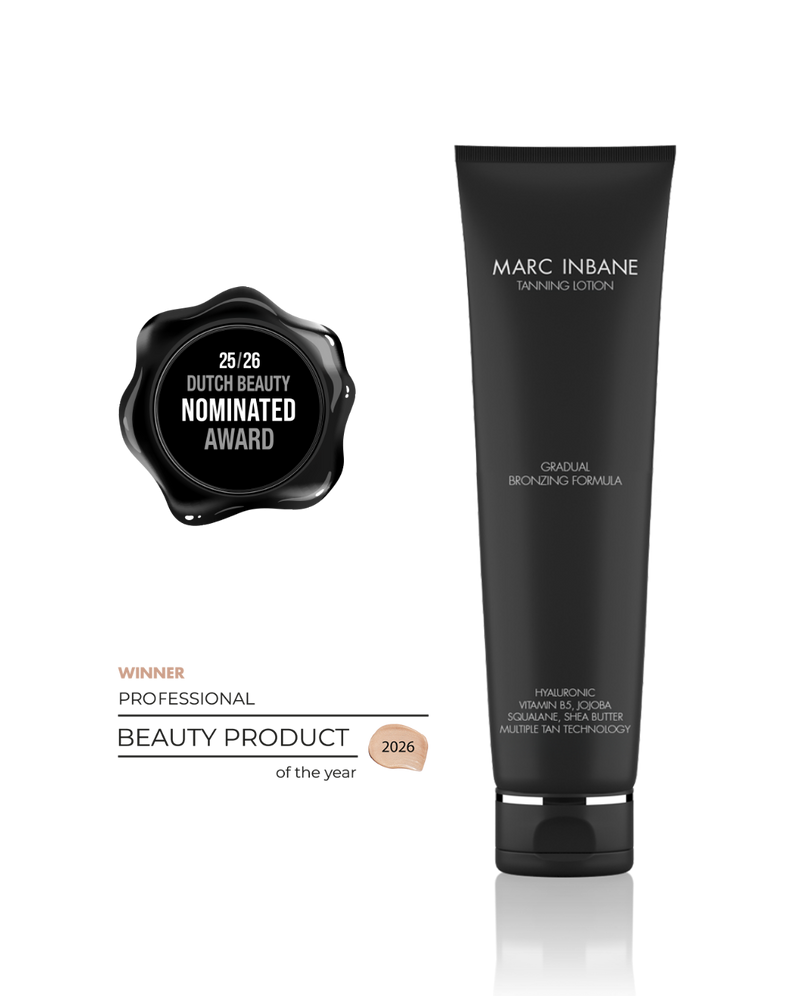
The Gradual Tanning Lotion builds colour gradually and gives you plenty of control, while the Natural Tanning Mousse can be applied evenly with the Tanning Glove. Both can be used without spraying. You can read more about the general safety of self-tanner in our guide: is self-tanner harmful?
NEW € 44,95

Gradual Tanning Lotion
Self-tanning body lotion, tanning for up to 14 days
€ 44,95

Natural Tanning Mousse
An evenly tanned complexion for up to 9 days!
SEASON'S BESTSELLER € 39,95

Perle de Soleil
Award-winning tanning drops to mix with your day cream
In this article